

Editor’s note: Monuments have been part of American civic culture since the early days of the nation, their building often motivated by patriotism, civic pride and the preservation of history. As Americans celebrate the country’s 250th birthday, thousands of reminders of our history stand silently across the nation – physical markers of events and people that shaped the United States. Read more on our ongoing series aligned with USA250.
As Americans celebrate the country’s 250th birthday this year, thousands of reminders of our history stand silently across the nation – physical markers of events and people that shaped the United States.
Monuments have been part of American civic culture since the early days of the nation, their building often motivated by patriotism, civic pride and the preservation of history.
"American monuments exist in part ‘to create a usable past' for this relatively young country – to tell an easier story than America's inconvenient, often contradictory history,” Dr. Paul Farber, historian and co-founder of Monument Lab, said in a 2021 story from George Washington University about why monuments matter.
Farber went on to say that while monuments don’t always tell the full story of history, they can still be “vantage points to assess these huge gaps and occlusions.”
America’s first monument wasn’t the Bunker Hill Monument in Boston or early statues of George Washington. According to Sally Webster in her 2015 book, “The Nation’s First Monument,” the honor goes to the Monument to General Richard Montgomery, sculpted in 1777 by French artist Jean-Jacques Caffiéri and installed on the porch of St. Paul’s Chapel in Manhattan in the mid-1780s.
Montgomery, a brigadier general in the Continental Army who led an invasion into Canada in the first months of the Revolutionary War, died Dec. 31, 1775. in an attack on Quebec City. He became one of the first American officers to die in battle. After Montgomery’s death became a national call to arms, the Continental Congress voted to erect a monument in his honor.
Early Monuments
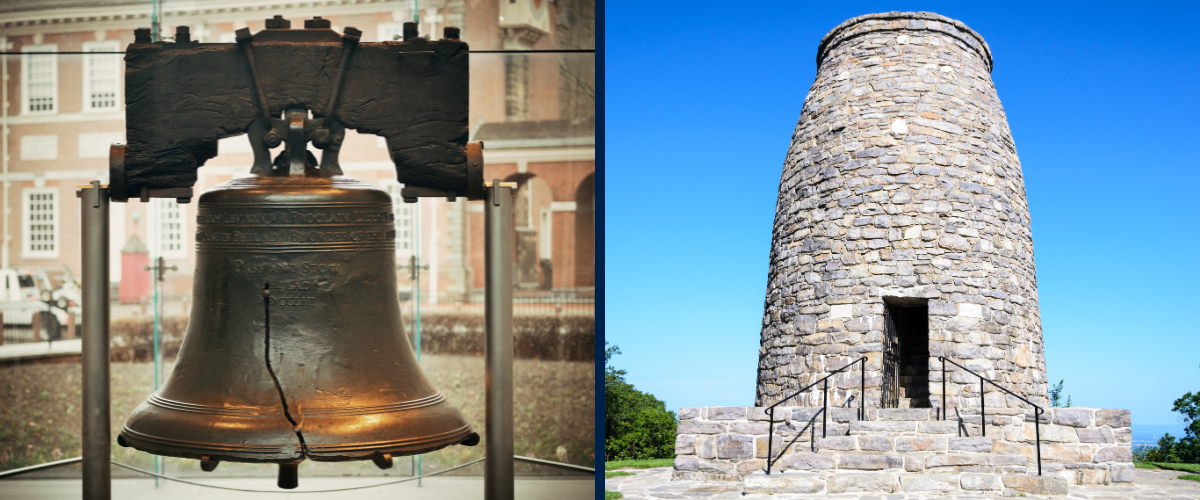
Many early American monuments focused on the Revolutionary War and its heroes, but monument-building didn’t come in vogue until the 19th century before booming in the 20th century. Early outliers were the Liberty Bell in Philadelphia and a handful of others – Montgomery, Bunker Hill in Boston and the Lexington Revolutionary War Monument in Lexington, Mass.
On July 4, 1827, residents of Boonsboro, MD., climbed nearby South Mountain to erect a 15-foot monument to the memory of George Washington. Their work was completed in a day, according to a Smithsonian magazine article highlighting the stone tower as the “first” Washington monument. Later additions to the monument on the Appalachian Trail raised its height to its 40 feet today.
“As it was raised in much haste, we cannot boast the regular accuracy of perfect beauty, yet it possesses both solidity and durability,” wrote William Bell in the local Torch Light newspaper. “It has such strength as I think will preserve it for ages.”
The townspeople’s work predated the Washington Monument’s completion by almost five decades.
Washington, D.C. Monuments
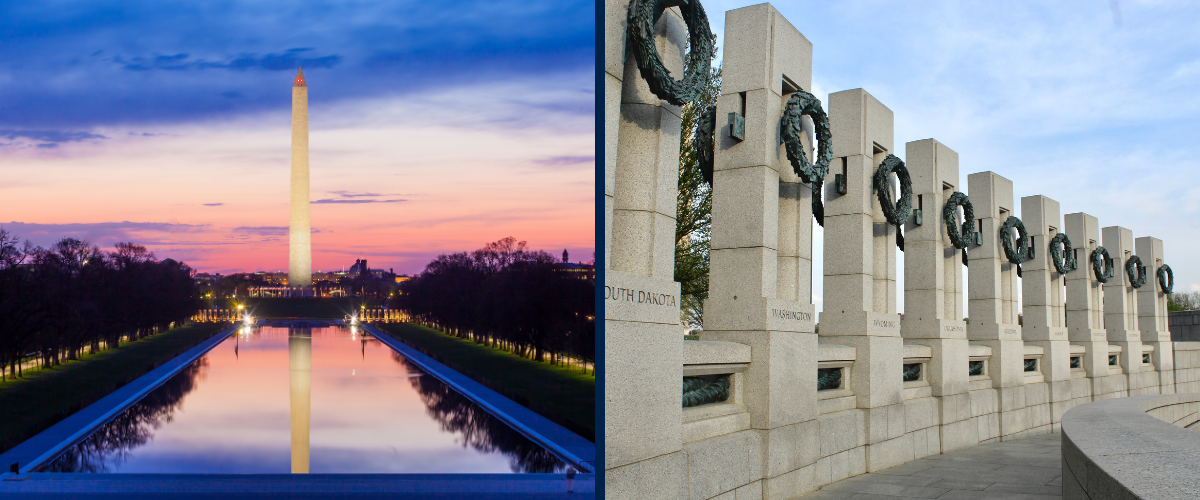
The first true monument in Washington, D.C. was the Washington Monument, dedicated in 1885. The Lincoln Memorial followed in 1922; Thomas Jefferson Memorial in 1943; Vietnam Veterans Memorial in 1982; U.S. Navy Memorial in 1987; Korean War Veterans Memorial in 1995; and Franklin Delano Roosevelt Memorial in 1997.
The 21st Century brought the World War II Memorial in 2004; Air Force Memorial in 2006, Martin Luther King Memorial in 2011; Dwight Eisenhower Memorial in 2020; and National World War I Memorial in 2021.
The Willard InterContinental, an ALHI hotel, has ties to some of that history. It hosted Abraham Lincoln prior to his inauguration and was where King finalized his "I Have a Dream" speech in 1963. The hotel features a dedicated History Gallery with historic documents, presidential artifacts, photographs and exhibits commemorating key legislative, civil rights and peace treaty milestones signed within the building.
War Memorials
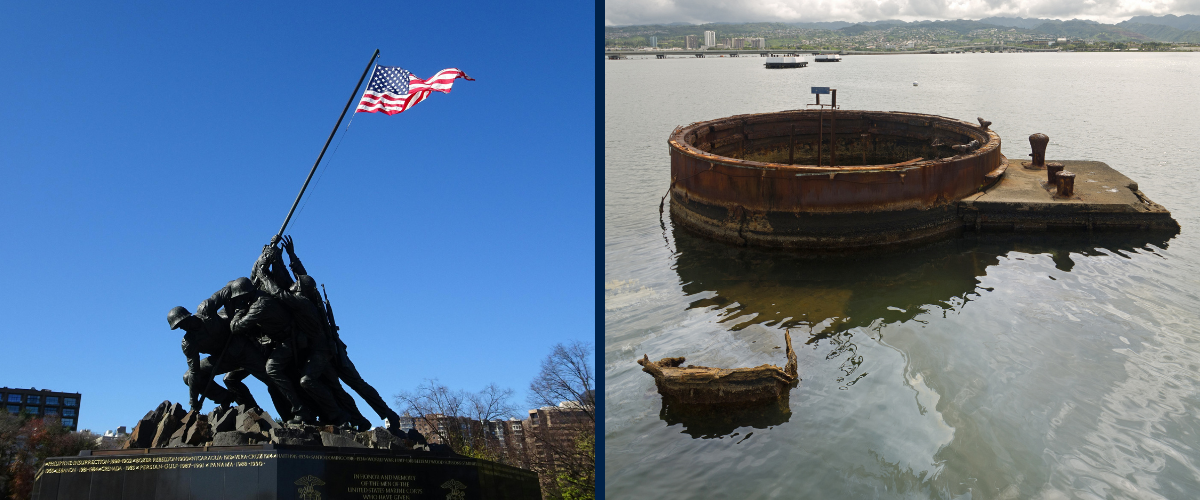
Not all the nation’s significant memorials to the fallen are in Washington, D.C.
U.S. Marine Corps War Memorial (Iwo Jima Memorial) is in nearby Arlington, Va. The bronze statue is based on the famous 1945 photograph of Marines raising the American flag on Mount Suribachi during World War II.
The USS Arizona Memorial at Pearl Harbor, Hawaii, was built directly over the sunken hull of the battleship USS Arizona to honor the 1,177 sailors and Marines killed during the December 7, 1941, attack.
The National Liberty Memorial and National World War I Museum and Memorial in Kansas City, Mo., was built in 1926 and features a 217-foot tower.
The Bataan Death March Memorial in Las Cruces, N.M., honors American and Filipino troops forced on the 1942 march.
The National D-Day Memorial is in Bedford, Va., the city that suffered the highest known per capita D-Day loss in the nation, and honors Allied forces who participated in the June 6, 1944, invasion of Normandy.
And the Alamo in San Antonio, a historic Spanish mission and fortress compound famous for the pivotal 1836 Battle of the Alamo during the Texas Revolution, features the Alamo Cenotaph, officially named The Spirit of Sacrifice. Created by sculptor Pompeo Coppini in 1936, this 60-foot-tall white limestone monument honors the defenders of Texas.
9/11 and Monuments to Other War Losses
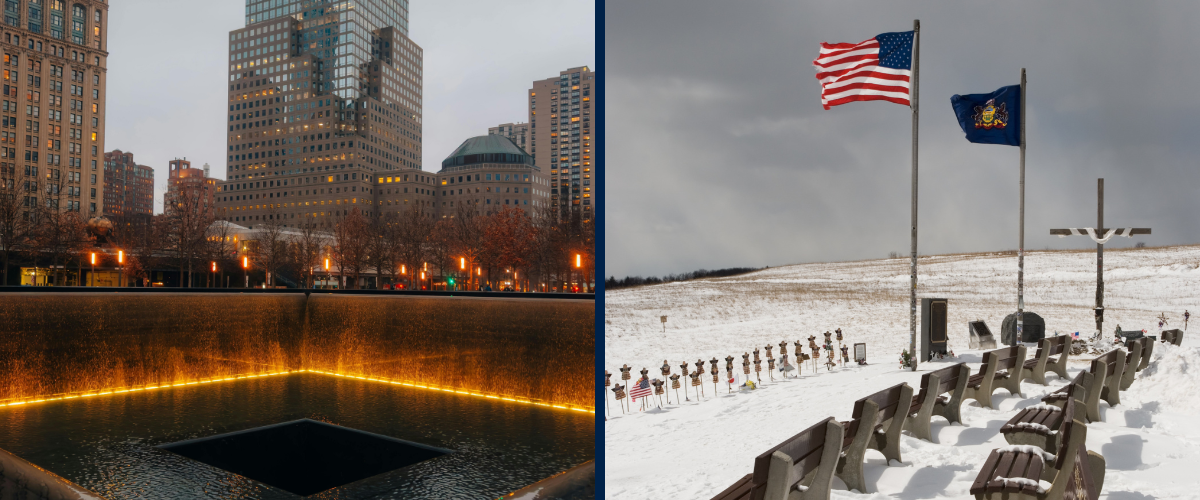
The 21st century brought a new kind of monument to war losses. Sept. 11 will mark 25 years since the attacks on America. The losses to terrorism led to three distinct monuments.
The National September 11 Memorial & Museum in New York city is at Ground Zero. Two reflecting pools are set within the original footprints of the Twin Towers and waterfalls flow down into central voids, surrounded by bronze parapets inscribed with the names of the 2,977 victims of the 2001 attacks and the six victims of the 1993 World Trade Center bombing.
Pentagon Memorial in Arlington, Va., honors the 184 victims killed at the site and aboard American Airlines Flight 77 on September 11, 2001. The monument consists of 184 illuminated cantilevered bench units, each hovering over a small pool of water and arranged by the years of the victims' birthdays.
The Flight 93 National Memorial in Shanksville, Pa., is dedicated to the 40 passengers and crew aboard United Airlines Flight 93 who thwarted hijackers bound for Washington, D.C. The Plaza of Walkways spans the crash site perimeter with a Wall of Names and the Tower of Voices – a 93-foot structure with 40 wind chimes.
Other monuments include the Oklahoma City National Memorial, built on the site of the former Alfred P. Murrah Federal Building to honor the 168 people killed in the April 19, 1995, domestic terrorism bombing. The 168 bronze and stone chairs are arranged in nine rows representing the building's floors.
Boston Marathon Bombing Memorial is located along Boylston Street near the finish line of the Boston Marathon and consists of granite pillars and bronze-and-glass spires marking the two locations of the April 15, 2013, bomb detonations.
The National Memorial for Peace and Justice in Montgomery, Ala., is the nation's first comprehensive memorial dedicated to victims of racial terrorism. It documents and names more than 4,400 Black Americans killed in lynchings between 1877 and 1950. Hanging Corten steel monuments represent each U.S. county where these acts occurred.
Coming to America and Moving West
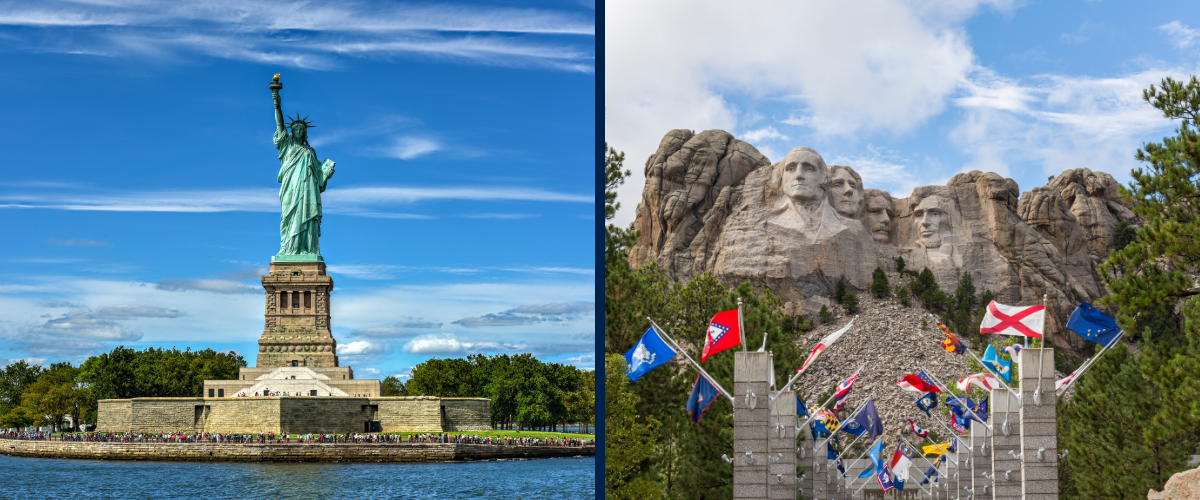
Not all of America’s famous monuments are dedicated to war or loss.
The Statue of Liberty on Liberty Island in New York Harbor was dedicated in 1886 as a gift from France to stand as a global symbol of freedom and democracy.
Mount Rushmore National Memorial in Keystone, South Dakota is a granite sculpture carved into the Black Hills featuring the 60-foot heads of American presidents Washington, Jefferson, Theodore Roosevelt and Lincoln.
Near Mount Rushmore, the Crazy Horse Memorial is an ongoing mountain carving depicting the Oglala Lakota warrior and honoring Native American history and culture.
Gateway Arch in St. Louis is the world’s tallest arch. The 630-foot stainless steel catenary arch is a monument to westward expansion.
Madonna of the Trail Monuments are in 12 states from Maryland to California. The series of 12 identical 18-foot statues erected by the Daughters of the American Revolution in the 1920s along the National Old Trails Road honor pioneer women who traveled west.
Off the Beaten Path
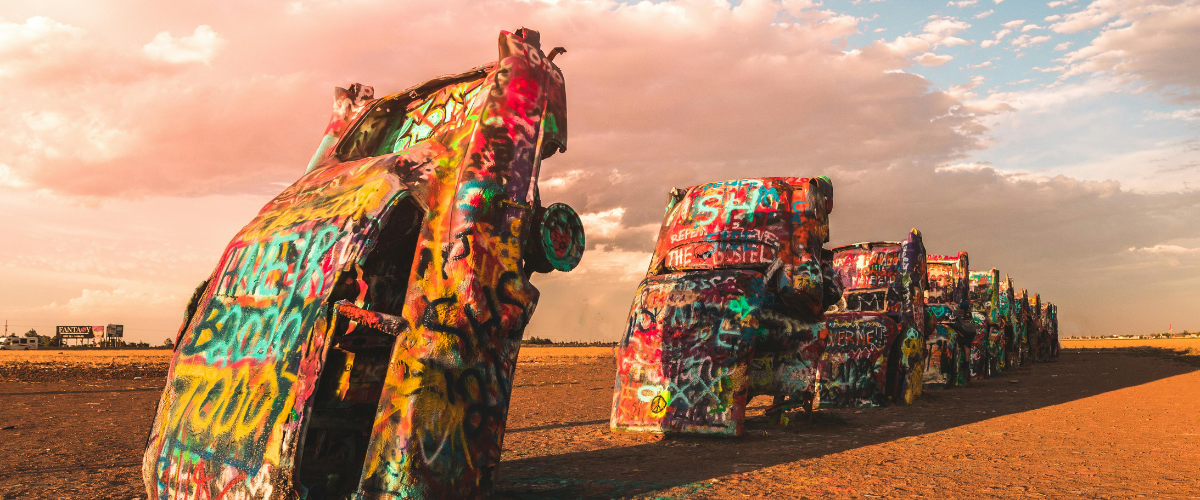
There are thousands of monuments in America that are more obscure but remember significant events.
Mendez Historic Freedom Trail and Monument in Westminster, Calif., commemorates the 1947 Mendez v. Westminster ruling, and marks the federal court case that ended school segregation for Mexican-American children in California and paved the way for Brown v. Board of Education.
Experimental Breeder Reactor No. 1 in Arco, Idaho, is where in 1951, scientists generated the world's first usable electricity from nuclear power.
The Boll Weevil Monument in Enterprise, Ala., erected in 1919, is believed to be the only monument in the world dedicated to an agricultural pest. After boll weevils destroyed cotton crops, farmers switched to peanuts, leading to a new prosperity.
For a touch of whimsy, there’s Cadillac Ranch outside Amarillo, Texas. on Route 66, where 10 classic Cadillacs are buried nose-first into the Panhandle dirt at the angle matching the Great Pyramid of Giza.
The Fremont Troll in Seattle under the George Washington Memorial Bridge is an 18-foot concrete sculpture of a troll coming out of the dirt and crushing a vintage Volkswagen Beetle in its left hand.
Planned Monuments
Dozens more significant American monuments are either in the construction or planning stages, including these:
-
The Desert Shield and Desert Storm Memorial is under construction in Washington, D.C. near the Lincoln Memorial to honor members of the armed forces who participated in Operation Desert Storm or Operation Desert Shield.
-
The Peace Corps Commemorative is a proposed monument in Washington, D.C. honoring the historic founding of the Peace Corps and the enduring American ideals that motivated its founding.
-
The American is a proposed 217-foot bronze statue of a Native American by sculptor Shan Gray in Sand Springs, Okla.
In the introduction to his 1996 book with Tom Engelhardt, "Commemorating August 6, 1945: Hiroshima in American Memory," historian, Edward Linenthal said most monuments are more about the future than the past.
"Our choices about who gets remembered, what gets remembered, where acts of remembrance take place, and how we express the significance of remembrance is as much – or more – about the future than the past."