

Editor’s note: The National Highway System became a monumental infrastructure that united the nation. This latest installment of our USA250 series explores the history of U.S. roadways, highlighting how the Interstate Highway System permanently transformed American travel, daily commerce and our collective cultural landscape.
Just 30 years after the birth of the United States, Albert Gallatin, Secretary of the Treasury under President Thomas Jefferson, conceptualized the Historic National Road to make the U.S. accessible for expansion to the west; it was authorized by Congress in 1806.
Construction of the road had a few stops and starts, eventually hitting peak travel along “The Main Street of America” in Maryland, Pennsylvania, West Virginia, Ohio, Indiana and Illinois in the 1840s. When the railroad charged onto the scene in the mid-19th century, travel along the Historic National Road declined in favor of the “iron horse.”
The Automobile Age
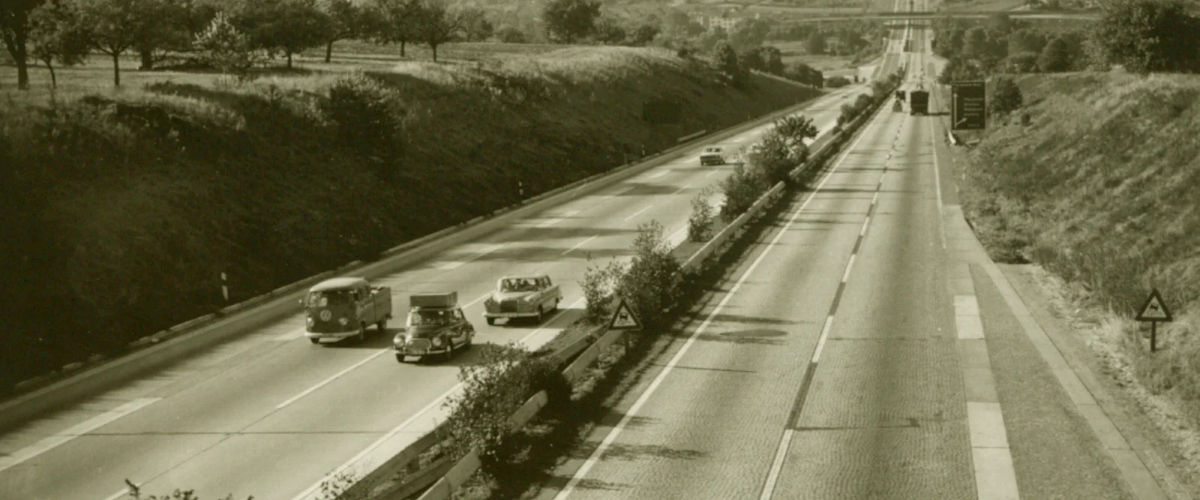
Another advent in travel, the automobile, put people back on the road and more infrastructure popped up – the Federal Aid Road Act of 1916 provided funding to expand and improve the country’s road system, and the Federal Highway Act of 1921 established a national highway system of roads for cross-country travel.
Around that same time, just after the end of World War I in the summer of 1919, a young Army officer named Dwight D. Eisenhower joined a convoy of 81 military vehicles to drive more than 3,000 miles along the Lincoln Highway (now U.S. 30) from Washington, D.C. to San Francisco. The mission of the convoy was to determine how easy, or difficult, it would be to move an entire army across North America. The trip wound north to Pennsylvania and Ohio before heading west across the Midwest and the Rockies to California. Fast forward a few decades to when Eisenhower was the Supreme Allied Commander in Europe during World War II; it was then he discovered the autobahns running throughout Germany.
“The old convoy had started me thinking about good, two-lane highways,” Eisenhower wrote in his memoir, “At Ease,” “but Germany had made me see the wisdom of broader ribbons across the land.”
The Federal-Aid Highway Act
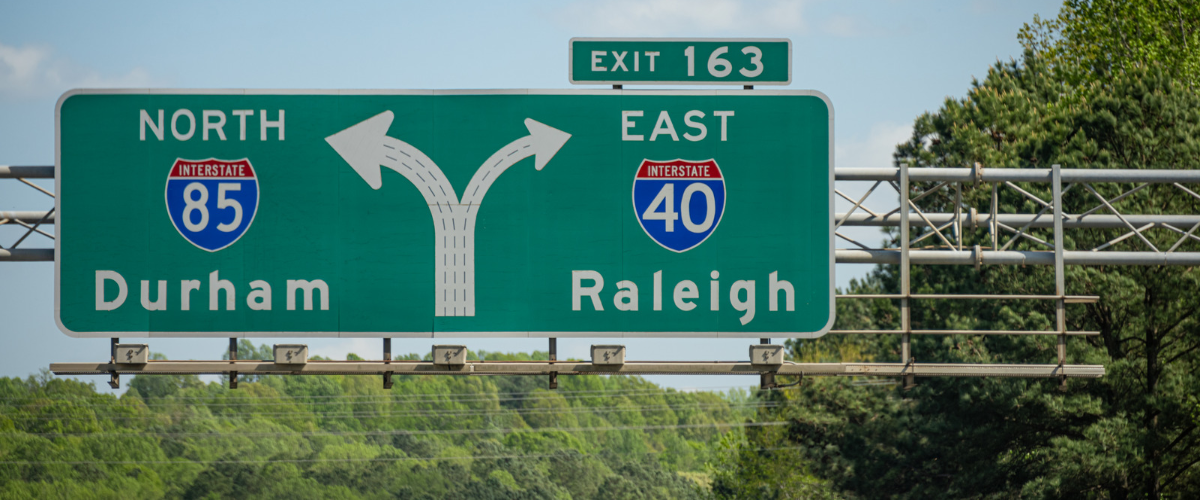
As president, he worked with Congress to enact the Federal-Aid Highway Act of 1956, forever changing the American landscape. Not only is the Interstate System use in daily lives for transportation and road trips, but as consumers – nearly every item bought has been on the system in some way.
Eisenhower considered the Federal-Aid Highway Act one of his most important achievements during his two terms as president; historians agree.
Here, a look at some of the fun facts and figures to commemorate 70 years of the Interstate Highway System and 220 years of U.S. roads and highways.
By the Numbers
-
The U.S. has 3.9 million miles of roadways, of which three million are rural.
-
The National Highway System is made up of more than 161,000 miles, including the Interstate System (41,000 miles).
-
The Interstate System accounts for just 1.2% of the National Highway System, but carries 24.1% of total travel.
-
The longest highway is U.S. 20, running 3,365 miles from Boston, Massachusetts, to Newport, Oregon.
-
The shortest highways are I-878 in Queens, New York, and I-110 in El Paso, Texas, both clocking in at 0.70 mile.
-
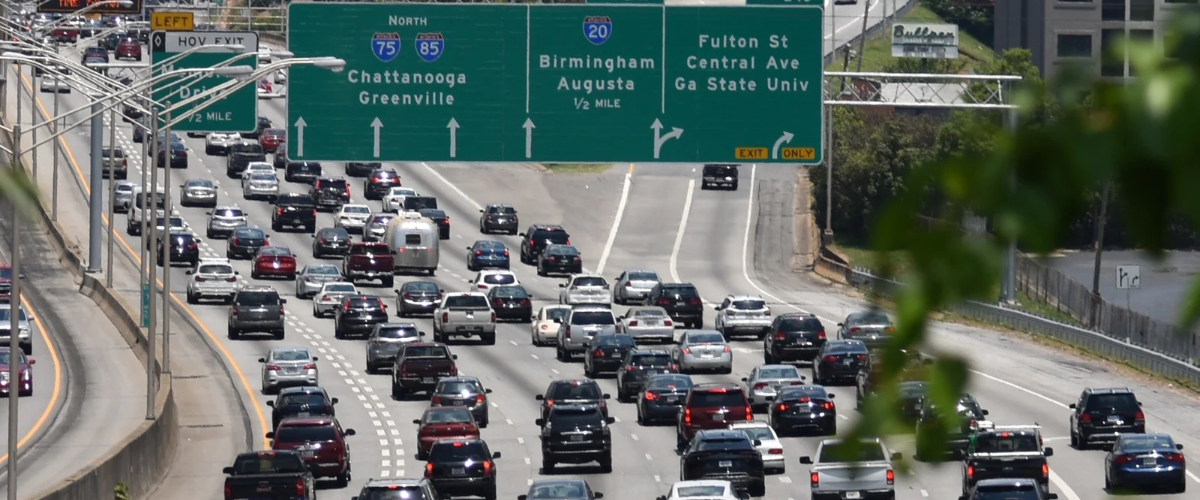
I-75 through Atlanta is the most traveled route in the U.S. with 405,000 annual average daily traffic (AADT); I-5 in Los Angeles comes in second with 386,600 AADT
Fun Facts

-
The number of registered motor vehicles jumped from less than 500,000 in 1910 to nearly 10 million in 1920, and more than 26 million by 1930. In 2024, there were 298 million registered motor vehicles.
-
The Lincoln Highway from New York City to San Francisco, was dedicated in 1913, and was the first transcontinental road for automobiles in the U.S.
-
The U.S. Numbered Highway System was established in 1925.
-
Even-numbered highways run east-west; odd-numbered highways run north-south.
-
Historic Route 66 is considered the most popular U.S. Highway.
-
U.S. Route 50 in Nevada is known as the “Loneliest Road in America.”
-
The oldest continuously used road in the U.S. is the Boston Post Road (U.S. Route 1 and U.S. Route 20), established in 1673 to connect Boston and New York City.
-
Railroad tracks serve as the foundation of the 113-mile Overseas Highway (U.S. Route 1) from Key Largo to Key West.
-
There are 184 Scenic Byways in the U.S., a collection of scenic and culturally significant roads, highways and routes.
-
U.S. highways feature prominently in many blockbuster films, including “National Lampoon’s Vacation,” “Thelma and Louise,” “The Cannonball Run,” “Boys on the Side,” “Speed,” “The Great Race,” “Planes, Trains, and Automobiles” and “Smokey and the Bandit.”