

Editor’s note: As America celebrates its 250th birthday, ALHI hotels have played an influential role in the evolution of film and television. Once used as informal studio headquarters, deal-making spaces and homes for Hollywood stars, landmark properties later became memorable settings for beloved productions. From famous scenes filmed at The Peabody Memphis, Fairmont San Francisco and The Langham Huntington, Pasadena, for example, hotels have built a lasting partnership with the entertainment industry.
Ever since Thomas Edison and William Kennedy Laurie Dickson’s inventions in the 1890s led to the rise of nickelodeons across the country, entertainment through movies and then television have become part of the fabric of American life.
As America celebrates its 250th birthday in 2026, it’s also time to recognize the important role hotels have played in silver and small screen entertainment.
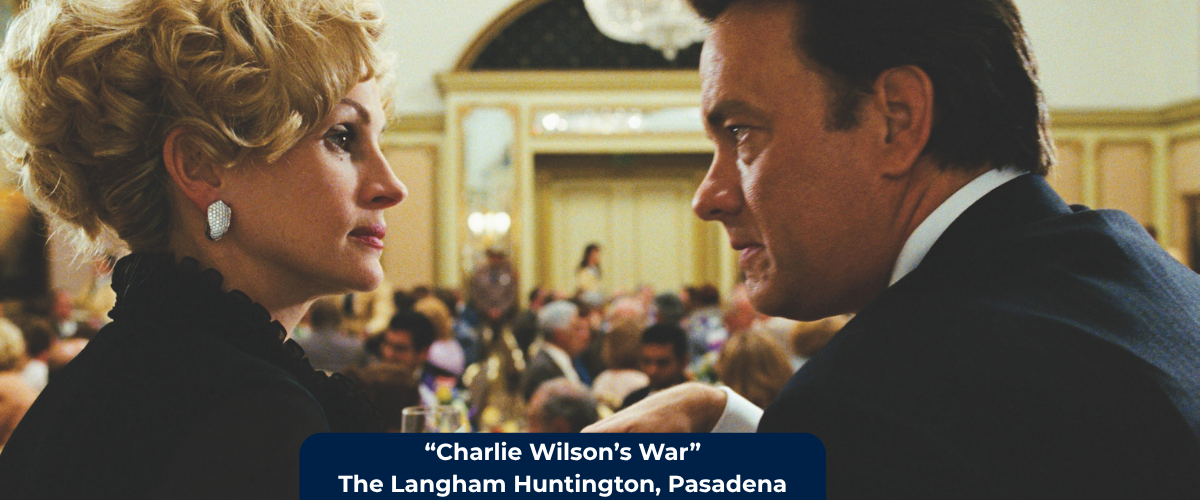 Photo: Universal Pictures
In the early decades of American cinema, hotels served as informal studio headquarters, contract negotiation rooms and home to the stars. Originally centered in New York and New Jersey, filmmakers moved west around 1910 to avoid fees and lawsuits from Edison’s Motion Picture Patents Company and to take advantage of Southern California’s year-round sunshine and diverse landscapes.
United Artists was organized by Charlie Chaplin, Mary Pickford, Douglas Fairbanks and D.W. Griffith in 1919 at Los Angeles’ Alexandria Hotel. The Hollywood Roosevelt Hotel, built by movie moguls Louis B. Mayer and Douglas Fairbanks, hosted the first Academy Awards in 1929.
And for nearly the last century, iconic ALHI hotels have served as the backdrop for some of America’s most treasured films and television shows. Who could forget the rooftop party scene from The Peabody Memphis in the Tom Cruise movie “The Firm?” Or Alfred Hitchcock’s “Vertigo” filmed at the Fairmont San Francisco?
Leasing hotel properties for production has provided steady revenue for hotels while giving studios pre-built, high-end production sets. And featuring a hotel in a successful film often turned the property into a national tourist destination. Hotels like The Langham Huntington, Pasadena frequently leveraged their cinematic history in marketing, creating a mutually beneficial partnership between the hospitality and entertainment industries.
“The Langham as a filming location dates from the silent film era to today,” said Leslie Marks, Director of Marketing and Communications at the hotel. “Its timeless facade, sprawling gardens and stylish décor allowed the hotel to double as everything from a grand home to a European resort.”
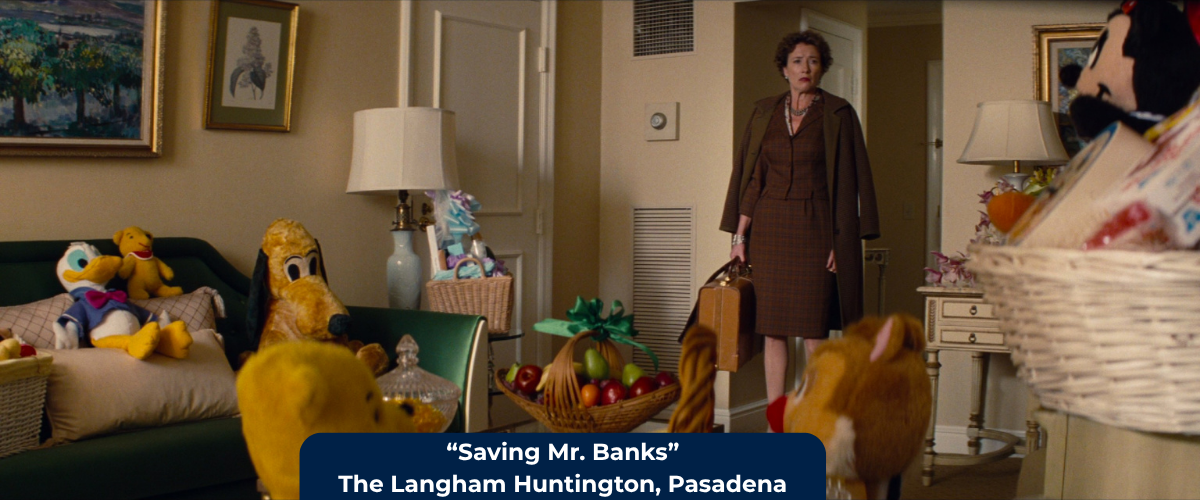 Photo: Walt Disney Pictures
From “The Yankee Girl” in 1915 to “The Parent Trap” remake in 1998 to “Seabiscuit” in 2003 and “Saving Mr. Banks” in 2013, the hotel has been featured in many films.
Since 2019, the Pasadena hotel has partnered with My Valley Pass, a San Fernando-based visitors’ guide organization, to host a dedicated quarterly film tour. The 90-minute guided walk takes guests on a journey through film at the hotel from the early 20th century to the present.
More ALHI Movie Hotels
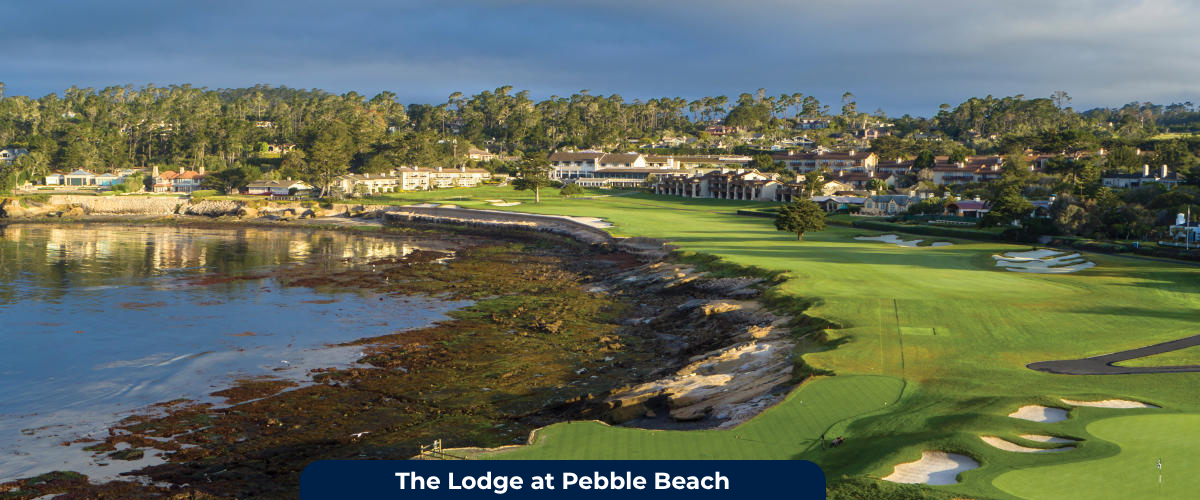
Pebble Beach Resorts, which include Casa Palmero Pebble Beach, The Inn at Spanish Bay and The Lodge at Pebble Beach is another iconic California location.
S.F.B. Morse developed Pebble Beach with a desire to attract publicity and established the resort as a favorite getaway for Hollywood’s elite, wrote Neal Hotelling in the 1999 book “Pebble Beach Golf Links: The Official History.”
“The stars not only came to play, but often, accompanied by film crews and production companies, came to work,” Hotelling wrote. “Over 180 major motion pictures have been made in Monterey County, and in several of them, Pebble Beach Golf Links served as a movie set, although the course did not always appear as itself.”
Hotelling chronicled the cinematic history including how in “National Velvet” in 1945, the course served as a coastal meadow in England, where horse trainer Mickey Rooney and young Velvet Brown, played by Elizabeth Taylor, first meet the horse, Pie, as he jumps a fence set above the sixth fairway.
In “Follow the Sun” in 1951, Glenn Ford plays Ben Hogan in this biography that includes the golfer’s 1949 victory at Pebble Beach followed by his comeback after a car accident. In “Julie” in 1956, Doris Day plays a flight attendant stalked by her husband Louis Jourdan. She frequents The Lodge at Pebble Beach and Beach Club and walks along the course between the two. In "A Summer Place” in 1959, Pebble Beach is the coast of an island in Maine where Troy Donahue’s family estate has been turned into a bed and breakfast.

Round Hill Hotel and Villas in Montego Bay, Jamaica, is the five-star villa prominent in “How Stella Got Her Groove Back.” The 1998 romantic drama featured Villa 11 in a starring role. Stella's hillside cottage, a three-bedroom signature villa with a private pool and sweeping ocean views, is where Angela Bassett's character unwinds and first meets Winston Shakespeare, played by Taye Diggs. Guests can still book it today.
Television
Although television was built on breakthroughs from around the world, Americans engineered, patented, commercialized and turned it into a mass medium.
Working out of a small lab in San Francisco, Philo Farnsworth conceived an electronic system as a high school student. In 1927, at age 21, he successfully transmitted the first electronic image – a straight line – using his vacuum camera tube.
RCA officially introduced television to the public with a live broadcast of President Franklin D. Roosevelt opening the 1939 World’s Fair in New York, making FDR the first U.S. president to appear on TV. The Federal Communications Commission granted the first commercial television licenses in July 1941. After World War II, American manufacturing and suburban expansion created unprecedented consumer demand. In 1946, fewer than 10,000 American homes had a TV set; by 1960, that number surpassed 45 million, meaning that over 87% of U.S. households had a set, according to 1950 and 1960 U.S. Census Data.
Just as hotels played a pivotal role in movies, they were also key to the development, adoption and growth of the television industry. While motion picture studios used hotels primarily as dealmaking hubs and executive quarters, hotels served as a testing ground for the small screen.
When RCA introduced television at the World's Fair, luxury hotels in Manhattan installed experimental TV receivers in lobbies and private dining suites. Major urban hotels were among the earliest sites for broadcast antennas and temporary transmission relay stations because of their height. Early live broadcasts of parades, political conventions and sporting events routinely set up base camps in hotel ballrooms and suites.
In the late 1940s and early 1950s, hotels became a primary engine for commercial TV set sales. As travelers began to expect televisions in their rooms, hotels placed massive bulk orders. By the early 1950s, hotel chains were buying thousands of televisions at a time – bankrolling mass production and driving down prices for consumers who wanted a TV at home, according to the Museum of Broadcast Communications.
ALHI Hotels on Television
Beyond the historical aspect, some of television’s most iconic television shows have used ALHI hotels as a backdrop. Remember "Highway to Heaven” and “Modern Family" at The Langham Huntington, Pasadena; “Murder, She Wrote" at Fairmont San Francisco; and “Magnum, P.I." and “Hawaii Five-0” at The Kahala Hotel & Resort in Honolulu.
Then there’s the reality show component, with “Real Housewives of Miami" at The Biltmore in Coral Gables, and "The Bachelor” and "Bachelorette” at Nemacolin Resort in Pennsylvania.
Finally, ALHI hotels brought America’s history into homes through television. Presidents Harry S. Truman and Dwight D. Eisenhower delivered televised speeches and held live press conferences from Fairmont San Francisco’s ballrooms.
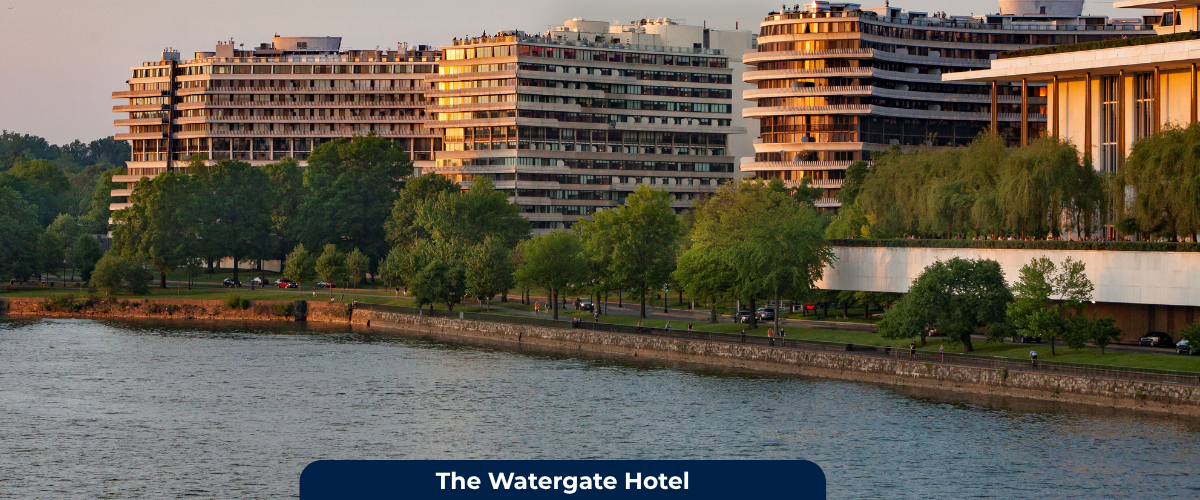
And following the Democratic National Committee break-in at the Watergate complex, network news regularly broadcast live from in and around The Watergate Hotel from 1972-74 to deliver breaking updates and press briefings.
More ALHI Hotels on Television
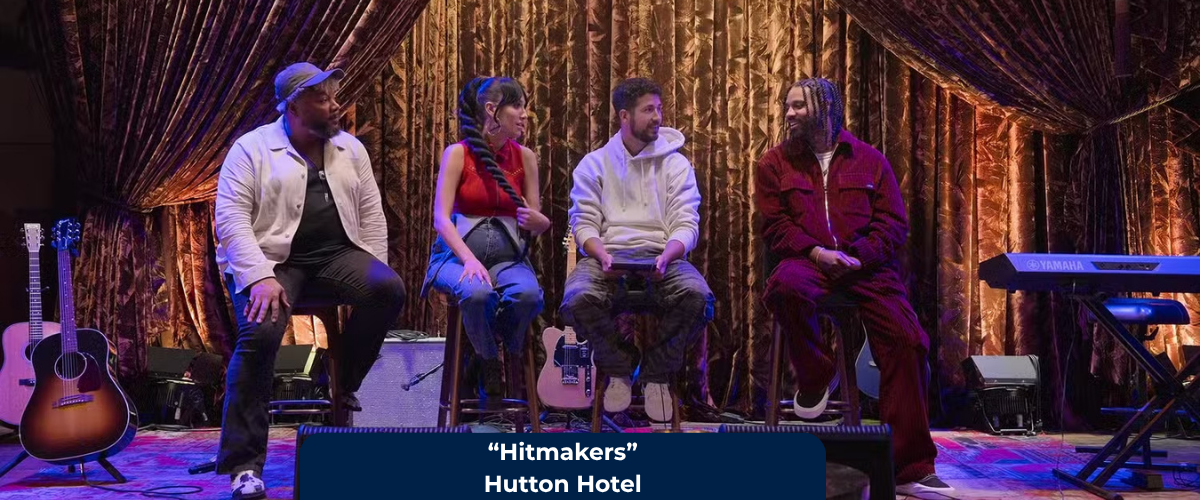 Photo: Courtesy of the Hutton Hotel
From historic events to sitcoms and dramas and reality TV, ALHI Hotels have been featured on TV for decades. Here are a few highlights.
The Biltmore, Coral Gables, Fla.
The hotel has been showcased on television, including location shooting for “Real Housewives of Miami” and “The Marvelous Mrs. Maisel.”
The Broadmoor, Colorado Springs, Colo.
Hosted television filming for CBS's “Perry Mason” television film series.
Fairmont San Francisco
Famous for serving as the exterior double and primary location for the fictional St. Gregory Hotel in the hit 1980s ABC drama series “Hotel.” It has also been featured in episodes of “The Streets of San Francisco” and “Nash Bridges.”
InterContinental Buckhead Atlanta
Hosted filming for broadcast series and network productions, including segments for CBS's “Inside Edition.”
Hotel Monteleone, New Orleans
This historic French Quarter hotel has hosted filming for HBO’s “Treme,” “NCIS: New Orleans” and “American Horror Story: Coven.” News segments, and documentaries celebrating its famous Carousel Bar and literary history also have been produced.
Hutton Hotel, Nashville
Hutton Hotel’s intimate live music venue, Analog, is home to “Recorded Live at Analog,” a signature PBS concert series that showcases acclaimed artists in an up-close performance setting. The property has also hosted production activity for Netflix’s “Hitmakers,” which brings together elite songwriters and producers as well as Apple TV+’s “My Kind of Country,” the global competition series executive produced by Reese Witherspoon and Kacey Musgraves.
The Kahala Hotel & Resort , Honolulu
Kahala served as a recurring filming location for the original “Magnum, P.I.,” where its patio doubled as the King Kamehameha Club, as well as episodes of “Hawaii Five-0.”
The Langham Huntington, Pasadena
The Huntington has appeared in more than a dozen television series including HBO's “Westworld”, “Modern Family,” “Knots Landing,” “Remington Steele,” and “Grey’s Anatomy.”
Nemacolin Resort, Farmington, Pa.
Nemacolin served as the primary, secluded resort bubble for Season 25 of “The Bachelor" starring Matt James and in Season 12 of “The Bachelorette” with JoJo Fletcher.
The Watergate Hotel, Washington, D.C.
Frequently featured across political drama series, historical documentaries, and news specials because of its place in U.S. history.
More ALHI Hotels on the Big Screen
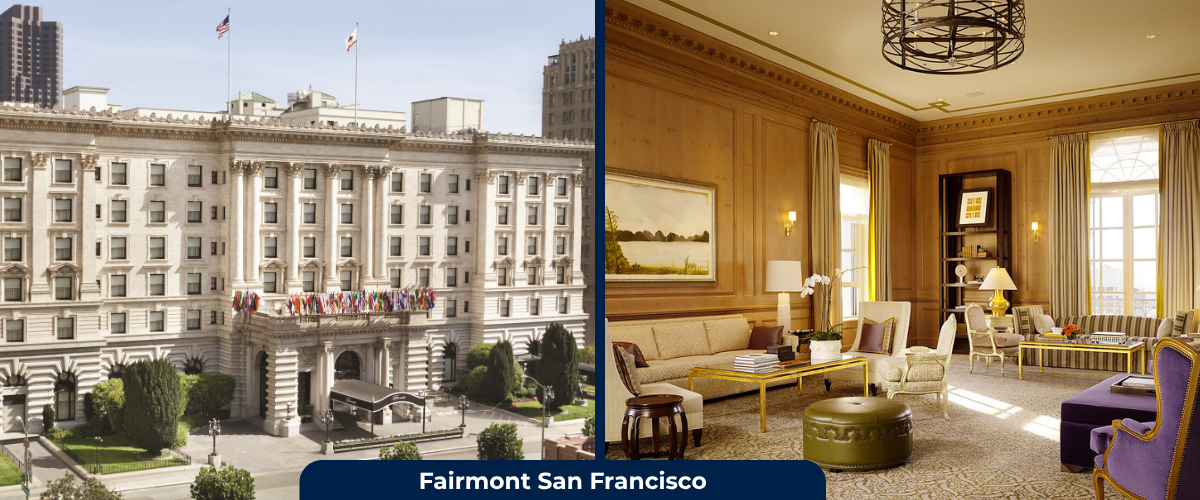
The list of movies filmed at ALHI hotels is long. Here’s just a sampling of hotels that served as locations for multiple films.
“Vertigo” (1958): Alfred Hitchcock famously stayed at and featured the hotel in his classic mystery thriller.
“The Rock” (1996): Sean Connery's character demands a luxury penthouse suite at the Fairmont in a key sequence.
“The Towering Inferno” (1974): Its grand architecture served as a backdrop for dramatic action sequences.
“The Intern” (2015): Featured prominently during business travel scenes with Robert De Niro and Anne Hathaway.
The Hermitage Hotel, Nashville, Tenn.
“Country Strong” (2010): Served as a prominent hotel backdrop in Nashville.
“Hannah Montana: The Movie” (2009): Featured for formal event scenes filmed in Tennessee.
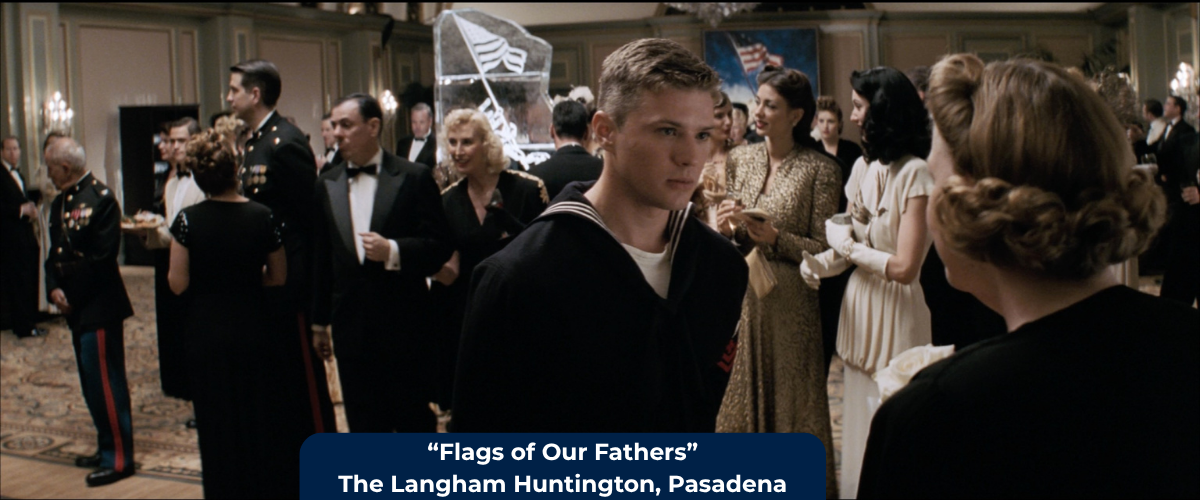
The Langham Huntington, Pasadena
“The Parent Trap” (1998): Featured throughout the film, including key hotel exterior and interior scenes.
“Charlie Wilson's War” (2007): Used for high-profile hotel interior and exterior scenes.
“Flags of Our Fathers” (2006): Featured as a prominent setting during production.
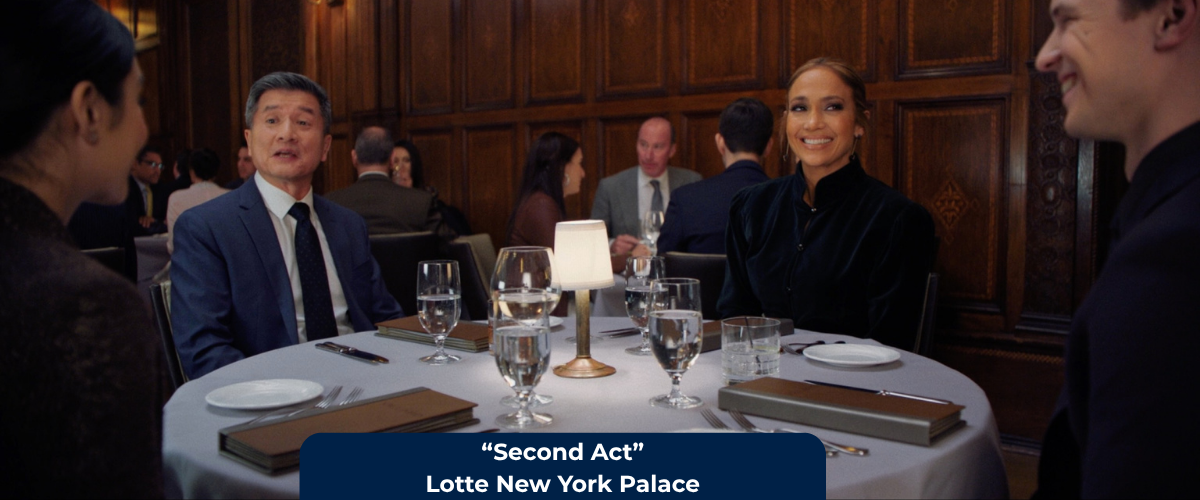
Lotte New York Palace, New York City
“27 Dresses” (2008): Used the courtyard and interior spaces for romantic comedy set pieces.
“Second Act” (2018): Featured the hotel's Madison Avenue entrance and luxury suites.
“She Said” (2022): Provided the Midtown setting for investigative journalistic meetings.
“The Firm” (1993): Hosted the rooftop party scene where Tom Cruise's character is recruited by the law firm.
“The Client” (1994): Filmed key restaurant interactions inside Chez Philippe.
“The Rainmaker” (1997): Served as a backdrop for legal drama scenes.
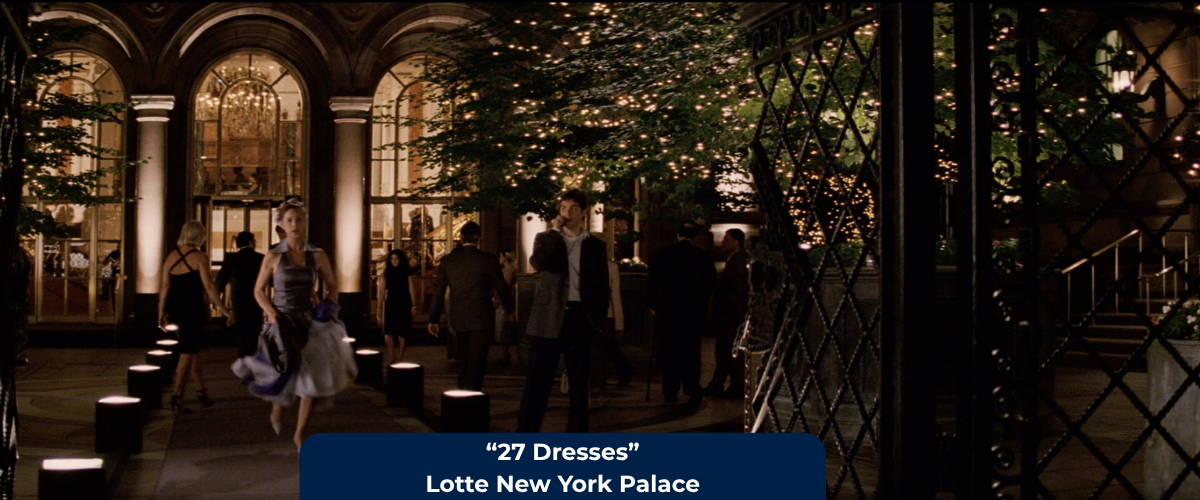 Photo: Courtesy of Lotte New York Palace
Casa Palmero Pebble Beach, The Inn at Spanish Bay and The Lodge at Pebble Beach, Pebble Beach, Calif.
“The Deep Six” (1958): Alan Ladd, as a Quaker Naval Officer, takes a leave to visit his fiancée in Carmel and join friends at the Beach Club.
“The Parent Trap” (1961): In this original, Brian Keith, the father of separated twins (Haley Mills) plays Pebble Beach while his family enjoys lunch at Club XIX.
“The Sandpiper” (1965): Richard Burton, playing an Episcopal priest, fails to hit across the chasm at the eighth hole, losing a $3,000 donation for his chapel fund.