

Editor’s note: What would Orville and Wilbur Wright think of today’s modern air travel? Their transformative flight in 1903 lasted just 12 seconds, but was the definitive moment that would launch planes, and people, into the skies where today, global travel not only transports people, it brings them together. This report is part of a year-long series examining issues and trends that have evolved over the course of American history as the United States celebrates its 250th birthday.
For almost half of the 250 years of U.S. history, Americans have been exploring the skies.
On December 17, 1903, Orville and Wilbur Wright transformed flight from a dream to a reality that would shrink the U.S. – and the world.
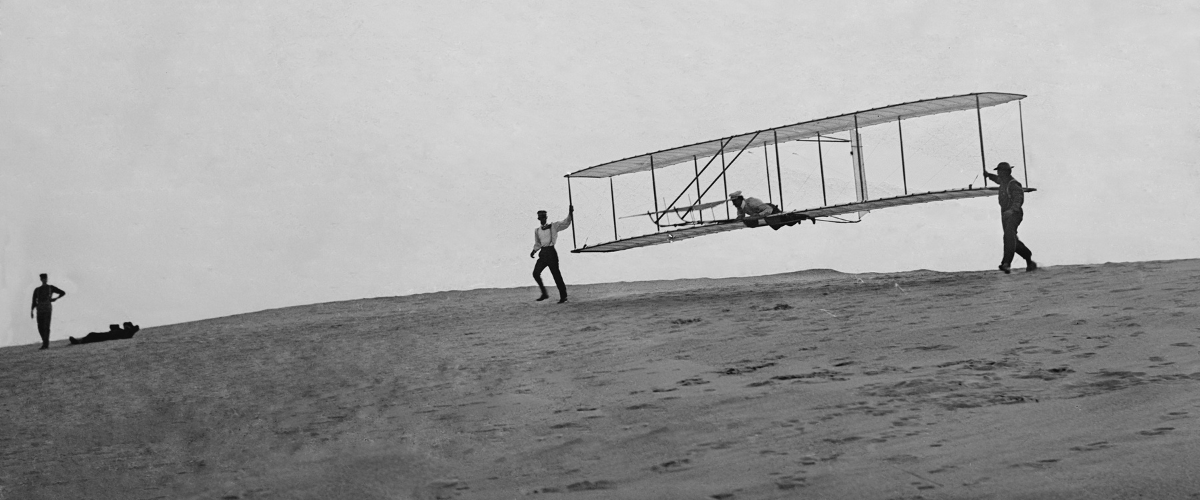
The brothers made the first successful motorized sustained flight of a heavier-than-air aircraft at Kitty Hawk, North Carolina. Although the flight lasted only 12 seconds and covered 120 feet, it proved that mechanical flight was possible.
Within two decades, commercial air travel had taken hold.

"If you're really to tell the story of 100 years of aviation in the United States, the marvel that is the aircraft and the innovations that have come over the decades is quite remarkable," said Gina P. Laughlin, Vice President and Head of Global Communications for Delta Airlines. Delta celebrated its 100th anniversary in 2025.
Delta Airlines had its roots in Macon, Ga., as Huff Daland Dusters, the world’s first aerial crop-dusting operation created specifically to combat boll weevils in cotton crops. In 1928, C.E. Woolman purchased the company and renamed it Delta Air Service, after the Mississippi Delta. A year later, Delta flew its first passengers from Dallas to Jackson, Miss.
Even though air travel was considered a luxury at the time – with a cross-country flight costing about half the price of a new car – it was far from luxurious. Still, more than a million passengers boarded planes in 1938 – usually walking out from a building to the plane on a flat, grassy airstrip.
Air travel also was grueling. Unpressurized cabins forced planes to fly at low altitudes through turbulent weather, leading to rampant airsickness and with noise levels reaching a deafening 120 decibels. To combat public fear and improve service, the first female flight attendants — originally required to be trained nurses — were introduced in 1930, according to the Smithsonian’s Air and Space Museum.
"If you go back to the early days, just the innovations in the aircraft themselves led to a much greater customer experience,” said Laughlin. “In those very early days we were all flying at very, very low altitudes. We were flying as best we could, around different weather. But even the most simple portions of flight evolved considerably with technology in those early decades, and that certainly improved the customer experience."
Customer Experience and Security and Technology
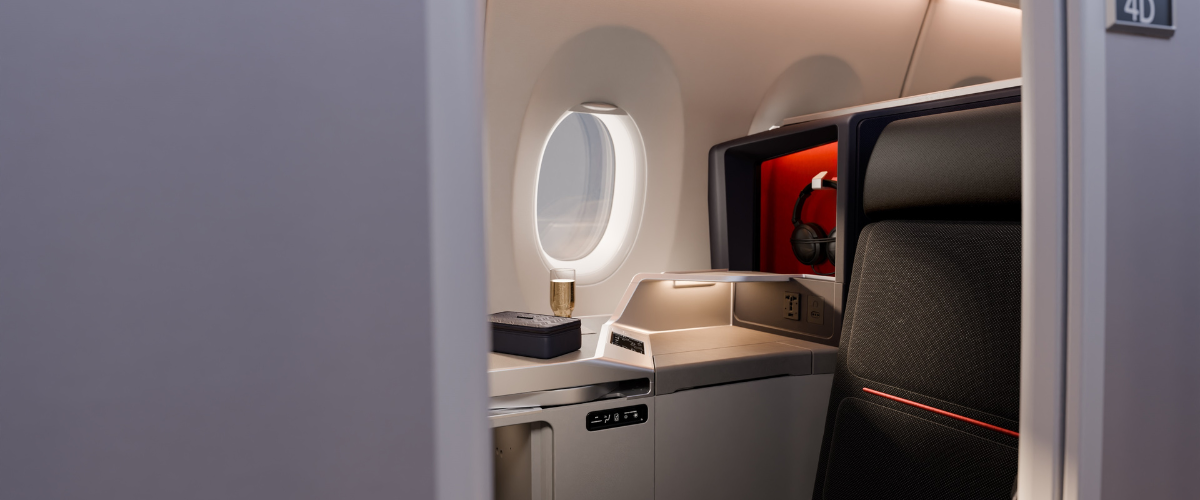
After World War II, air travel surged as technology revolutionized civil aviation. By the mid-1950s, airliners had officially surpassed both trains and ocean liners as the preferred method for domestic and transatlantic travel. In 1955, Delta pioneered the "hub and spoke" system, a model most airlines still use today to route flights through a central airport.
Jet engines in the late 1950s brought larger, faster aircraft like the Boeing 707, ushering in the "Jet Set" era. Falling fares in the 1970s and industry deregulation eventually made flying affordable for the general public.
In recent decades, computers transformed the experience, streamlining booking and ticketing. At the same time, there were heightened security measures implemented after the 2001 terrorist attacks.
Delta has leaned into the customer experience mantra since the early 2000s, Laughlin said.
“We realized that this isn't meant to be a commodity industry," she said. "This is an industry where people care about the experiences and want to have various aspects of their travel from start to finish feel like it is more than just a seat on an airplane. We're giving customers an experience that includes everything from access to really beautiful lounges, seamless travel and removing some of those stress points through technology.”
Airport security has evolved from a state of total transparency – where someone could walk directly to the gate to wave goodbye to a passenger — to a high-tech, multi-layered system designed to detect threats and verify identity through biometrics.
From the 1920s to the 1960s, airport security was virtually non-existent. Airports were public hangouts and families could walk onto the tarmac or wait at the gate. Security was focused on preventing theft or vandalism, not terrorism.
The turning point came in the 1960s, after a rash of hijackings mostly by people trying to force planes to fly to Cuba. In 1969, there were 82 air hijackings worldwide. In the 1970s, the first mandatory security measures went into effect.
In 1973, the Federal Aviation Administration began requiring all passengers and carry-on bags to be screened. Walk-through metal detectors became standard and X-ray technology was introduced for carry-ons. Private security companies conducted the screenings.
But even into the 1990s, non-passengers could still pass through security to send off or meet friends and loved ones.
The Sept. 11, 2001, attacks forever changed aviation security, moving from searching for metal to searching for intent and explosives. In November 2001, the Aviation and Transportation Security Act was signed, creating the TSA and federalizing airport security.
New security measures included sterile terminals allowing only ticketed passengers past checkpoints. Cockpit doors were reinforced with steel to prevent unauthorized entry. And after Richard Reid’s 2001 shoe bomb attempt, passengers began removing shoes. In 2006 following a plot to use liquid explosives, the "3.4-ounce" rule was established for liquids in carry-on bags.
Today, security is moving toward a "frictionless" model where technology does the work behind the scenes. Many airports now use Computed Tomography (CT) scanners to create 3D images of bags, allowing you to leave laptops and liquids inside because the AI can "see" around objects.
In 2025 and 2026, facial recognition became standard. At hubs like Los Angeles International Airport (LAX) and New York’s LaGuardia Airport (LGA), a passenger's face often serves as the boarding pass and ID. Advanced imaging replaced metal detectors. AI security cameras detect anomalous behavior in crowds, flagging individuals who appear unusually stressed or loitering in restricted zones.
All of this makes for a more seamless customer experience with enhanced security, Laughlin said.
"The touchless ID facial recognition is very helpful in a smooth experience and smooth transfer for customers going through security,” she said. “We have good, strong partnerships with CBP and TSA, especially in our hub airports. We’re trying to do our best to make sure that the system is as safe and secure as we all want it to be, but that it's also as efficient as possible for our customers."
Airports More Than Just A Stopover
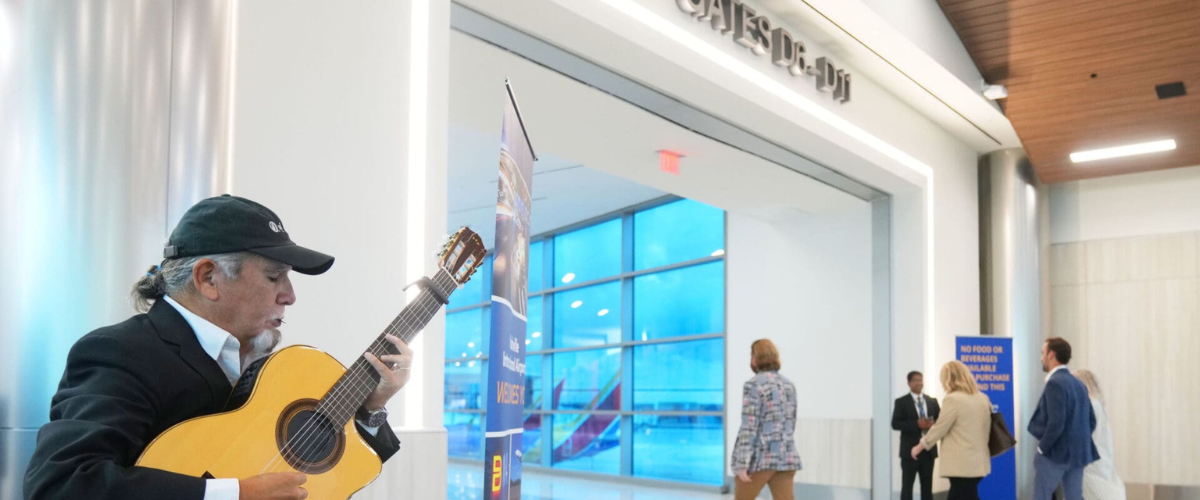
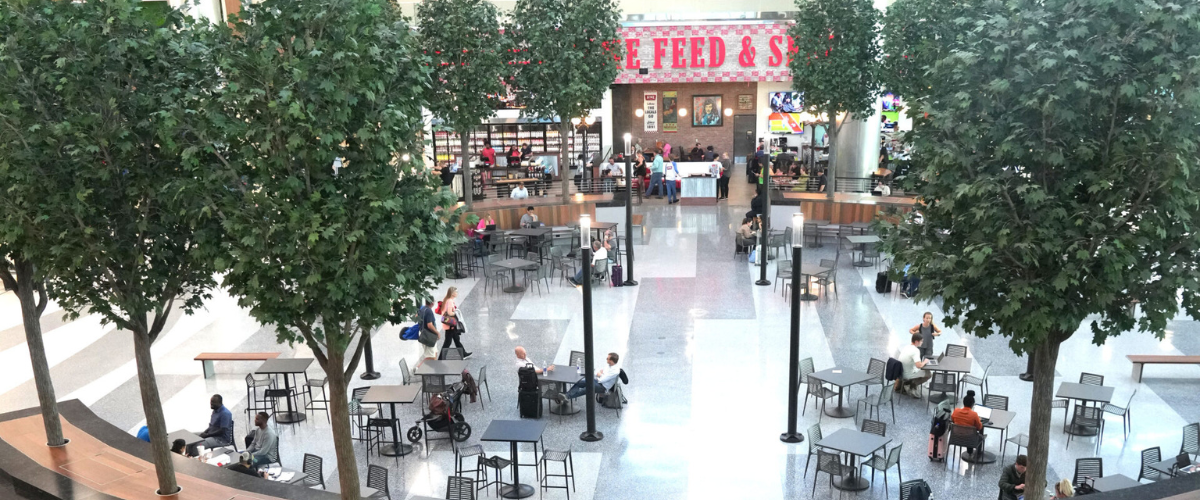
Airports evolved during the flight age from simple transit terminals patterned after railway stations to offering destination-style amenities. The strategy gives travelers a reason to arrive early by offering experiences they can't find elsewhere. That means high-end shopping, dining, massages and even live music.
Nashville International Airport is one that has it all and is continuing to expand the options with terminal additions.
"When you step off the plane at Nashville International Airport, you immediately know you’ve arrived in Music City," said Adrienne Siemers, Chief Sales Officer at the Nashville Convention & Visitors Corp. "From live music to Nashville Hot Chicken, to Tennessee whiskey tastings, to art displays from local artists - BNA is truly authentic to Nashville’s creative identity.”

And of course, there’s country music.
“You never know who's going to jump up on stage and perform at one of our airport venues - could be Keith Urban, Darius Rucker or the next big country star on their way up the charts,” she said.
The airport even offers a visitor’s pass to allow non-fliers to pass through security to shop and dine.
In recent years, Delta has poured money into remaking key hubs — from a complete rebuild of LaGuardia and a revamped Salt Lake City terminal to Delta One check‑in, security and lounge complexes at LAX, New York’s JFK, Boston and Seattle. It's part of the strategy to turn airports into a competitive advantage as Delta markets its premium offerings to travelers, Laughlin said.
LaGuardia is now a showcase, she said.
"It's an airport that you now really want to fly through, for the convenience of how it is laid out,” Laughlin said. There is plenty of lounge space, plenty of gate space and it’s just a nice place for our customers to relax."
The terminal upgrades are also adding international markets for Delta.
"Salt Lake has received a number of international destinations over the years. You can connect to Europe and now over the Pacific," she said.
European airports also have pivoted heavily toward "seamless travel," integrating biometric tech and high-end hospitality. Among Europe’s top-rated airports, Zurich offers fast security in a luxury mall setting and outdoor observation deck to watch planes take off with the Alps as a backdrop. Munich has the world’s first airport brewery. Istanbul is the world’s busiest airport and the most technologically advanced in the region. The architecture is stunning, and the duty-free section seems like a city.
What’s Ahead
Major U.S. airports have a massive building boom under way to replace aging 20th-century terminals with digital-first, sustainable facilities designed to handle massive post-pandemic passenger increases, according to simpleflying.com.
New York’s JFK is replacing its fragmented layout with two massive new terminal complexes worth $19 billion. The first phase is set to open later in 2026, eventually offering 23 international gates and a massive retail and dining marketplace.
Dallas-Fort Worth International is building its sixth terminal, using a unique "modular" approach where massive sections of the building are constructed off-site and moved across the airfield, adding 15 gates by 2027.
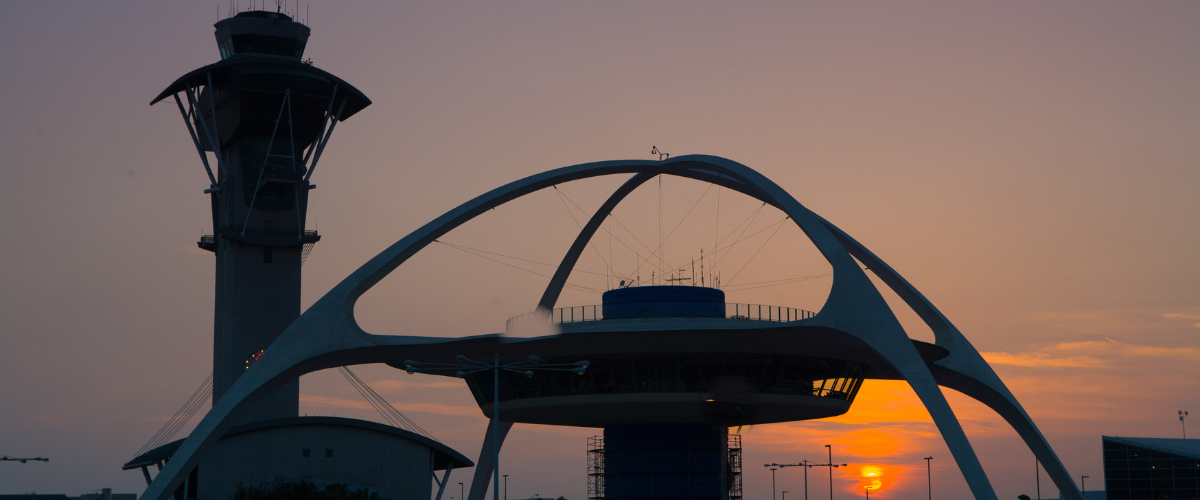
LAX is racing to complete its $30 billion improvement project before the 2028 Olympic Games. The arrivals and departures refresh includes a retro beach and cinema aesthetic.
Chicago O'Hare is demolishing the old Terminal 2 and replacing it with the O’Hare Global Terminal to allow international and domestic flights in the same location for faster connections.
For Delta especially, the focus of the company’s second century is global travel.
“It’s estimated that 80 percent or more of the world’s population has never experienced air travel,” said Ed Bastian, CEO of Delta Air Lines said at CES 2025 in Las Vegas. “That’s why, as we continue to expand as an international airline, increasing the world’s access to travel isn’t just an opportunity – it's our responsibility.
“We live in a divided world, which is why what we do at Delta is so important,” he said. “Our job isn’t to transport people. It’s to bring them together.”
Laughlin said new long‑haul Airbus aircraft and routes such as Atlanta–Riyadh and L.A.–Hong Kong will make U.S.-style air service more accessible to the four in five people worldwide who have never flown.
Delta and Airbus are working on reaching net-zero carbon emissions by 2050 with innovations in aircraft design, fuel use and flying techniques for optimum fuel efficiency.
One technological improvement on the horizon is elimination of bag recheck on international connecting flights – a development sure to make travelers happy.
"We've been running some tests on the remote baggage screening where we’re eliminating that recheck,” Laughlin said.
“Just think about the relief of that stress of connecting internationally."
Our Series
January: Historic Hotels Helped Shape American History - and Defined Luxury.